World Nursing Education and Practice Congress
THEME: "Advancing Global Nursing Through Education and Excellence in Practice"
 21-22 Sep 2026
  Ramada Lisbon, Lisbon, Portugal
 THEME: "Advancing Global Nursing Through Education and Excellence in Practice"
21-22 Sep 2026
Ramada Lisbon, Lisbon, Portugal 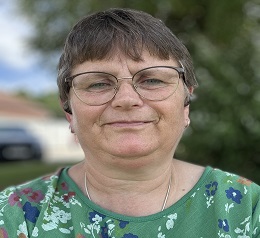
Bournemouth University, UK
Title: Nursing Leadership and Educator Collaboration: The Catalyst for Meaningful Post-Registration Learning for Service Improvement in Nursing Practice
Dr. Tanya Andrewes is a Senior Lecturer in Adult Nursing at Bournemouth University with a professional background in oncology nursing and extensive experience across higher education and distance learning environments. Her career has spanned clinical practice and academic leadership, including educational roles within both a traditional red brick university and distance education contexts.
Her academic and professional interests focus on open education, accessibility, and equity in learning opportunities, with a strong commitment to widening access to education for healthcare professionals. Dr. Andrewes’ research explores the intersection of nursing practice, lifelong learning, and digital education.
She recently completed her Doctorate, which investigated how registered nurses use free online learning resources to meet continuing professional development requirements for revalidation with the Nursing and Midwifery Council. Her work contributes to ongoing discussions around open educational resources, professional learning, and the evolving landscape of nursing education and practice.
This research was driven by the global
decentralisation of nurses’ continuous professional
development practice. The
responsibility lies with registered nurses to source their own
post-registration learning, with free online learning one recommended solution.
The research objectives were to explore how registered nurses use free online learning resources for
post-registration learning.
Using a constructivist grounded theory
methodology, eighteen registered nurses
across clinical practice
and education-based settings
were interviewed. Data analysis resulted in two theoretical
categories: ‘learning as a social endeavour’ and ‘being swallowed
up in practice’. The categories reflected
challenges that nurses faced in using free online learning as continuous professional development, resulting
from employing organisations’ control over their
ongoing learning.
Findings revealed how the burden of online
mandatory training created barriers to nurses’ independent use of free online
learning. Mandatory training was often
completed in nurses’ own time, using
their own resources. Consequently, they learnt strategies to complete it quickly
to meet training deadlines. They adopted similar approaches to completing free
online learning for professional development, so they could meet revalidation
deadlines. Nurses described how using free online resources created feelings of
‘learning in a silo’, disconnected from their professional responsibility to
engage in service improvement.
The research findings were synthesised in the context of organisational learning theory. A theoretical framework was developed from the research, which supports the integration of free online learning into meaningful team-based organisational learning activities for service improvement. Nursing leadership and partnership with educators was highlighted as instrumental in manipulating the conditions in the local practice setting, supporting social learning that could develop into organisational learning for service improvement. Partnership between nursing leaders and educators is a catalyst for individual and organisational learning through skills development around online learning and through the provision of education and research resources