World Nursing Education and Practice Congress
THEME: "Advancing Global Nursing Through Education and Excellence in Practice"
 21-22 Sep 2026
  Ramada Lisbon, Lisbon, Portugal
 THEME: "Advancing Global Nursing Through Education and Excellence in Practice"
21-22 Sep 2026
Ramada Lisbon, Lisbon, Portugal 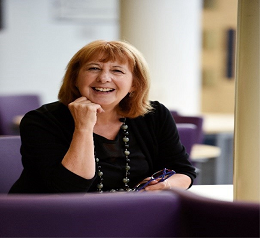
Northumbria University, United Kingdom
Title: Reframing Incivility for Women in Healthcare
Gill is
an Assistant Professor at Northumbria University and is the lead for
Restorative Practice programming. Gill has held leadership positions in public
health in the U.K and Canada. Her research interests include gender, women’s
leadership, and restorative practices. Gill is an Executive Coach and fellow of
the Chartered Management Institute and an associate of the Institute of
Leadership and Management.
She co-authored: ‘Gender bias in organizations: From the arts to individualized coaching’ (2021); ‘New Development: Translating restorative practices into public sector organizations (2025) and ‘Restorative Just Culture as approaches to error management in healthcare settings: A scoping review (2026).
Introduction: In healthcare worldwide, behaviours of incivility are commonplace negatively affecting healthcare professionals well-being whilst impacting patient safety, staff retention and workplace culture. Women are at higher risk of being a victim of incivility due to gender stereotype threat and activation. This study explored the potential value of arts-based interventions as dominant ‘conventional’ interventions had revealed limited impact.
Methodology: The narrative inquiry study was carried out across two NHS Trusts in the UK incorporating three phases of i): Constructing the relationship with participants and initial data collection using a ‘life-grid’ interview; ii) An arts-based workshops and initial data analysis: iii) Post workshop semi-structured interviews and further data analysis. Data was collected between September 2025 to April 2026.
Findings: We found that arts-based interventions promoting creativity, sense-making and increased reflection were highly effective in allowing healthcare professionals to benefit from transformational learning, leading to a shift in perspective, belief and behaviour. The distinctive approach empowered women healthcare professionals by encouraging the development of creative ideas to respond to their own experiences of incivility events.
Conclusion: Arts-based interventions enabled deeper and more meaningful learning for individuals promoting a new way of ‘seeing and acting’ in the moment, enabling transformational learning whilst improving psychological safety, women’s wellbeing and patient safety. This approach is complimentary to the current pedagogy by demonstrating that less rational-orientated experiential learning methods provide a constructive planform to explore incivility. Our hope is that professional women in healthcare can use reframing, the creative, specifically tailored interventions to address incivility through empowerment.